


- Carl Jung
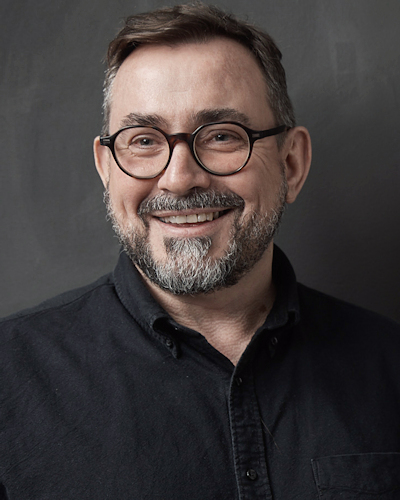
Mr Brad McLean
Clinical Psychotherapist, Relationship Therapist
Brad McLean Psychotherapy & Counselling
Orford, TAS 7190
Online Therapy Australia-wide
Philosophy & Vision
I’m Brad McLean, a PACFA-registered psychotherapist and Certified Transactional Analyst offering relational psychotherapy and couples+ therapy online across Australia. I work with adults, partners and GSRD (gender, sexual and relationship diverse) clients experiencing anxiety, depression, trauma, grief, identity and sexuality concerns, relationship distress, workplace conflict and post-psychedelic integration.
My style is warm, collaborative and actively engaged; I’m interested in how your present struggles connect with deeper relational patterns, and how therapy can support more autonomy, coherence and satisfying intimacy in your life. I particularly welcome same-gender couples, gay men at different life stages, creatives, professionals and other therapists who want thoughtful, in-depth work rather than brief, manualised counselling.
Background
For a decade, I worked as an intensive care nurse in Sydney, which exposed me to trauma, loss, grief, recovery and, importantly, the resilience and drive people have to survive and thrive when facing life's challenges. Since then, I have worked as a medical journalist, editor and corporate relations professional, so I also understand the impact competitive, high-stress work environments can have on people's lives. I have been practising as a therapist since 2008. I lived and worked in Potts Point in Sydney for 25 years, and two years ago I made the change to a rural life in Tasmania. I continue to move between the two locations but primarily live in Tasmania. It's for this reason that I work exclusively online.
Services
I have a busy private practice online, seeing individuals, couples, and those in non-traditional relationship configurations. I am a BSANZ Balint Group leader, and I run Balint groups for mental health professionals and see a small group of supervisees for individual supervision. I am on the editorial board of the Transactional Analysis Journal, where I have edited special issues on gender and sexuality and on relationships, and I have taught about couples+ therapy in training organisations in the UK. I have had a paper published on my own approach to relationship therapy based on Transactional Analysis, which is ranked as one of the most read papers in the recent history of the journal.
Quality Provision
I have been in continuous individual supervision, weekly or fortnightly, throughout my professional practice. I have also been in Jungian analysis for many years, and my previous therapy with a somatic therapist lasted 11 years. In addition, I participate in a monthly Balint group led by a psychoanalyst and attended by a range of mental health professionals. I am bound by the codes of ethics of PACFA and the ITAA.
Areas of Interest
Accreditations
- Bachelor of Nursing - 1997 - Sydney University
- Diploma of Transactional Analysis - 2013 - Australian Centre for Integrative Studies
- Psychoanalytic Psychotherapy Course - 2014 - Sydney Institute of Psychoanalysis
- Gottman Method Couples Therapy (level 3) - 2015 - Gottman Institute
- Certified Transactional Analyst - 2021 - ITAA
- Masters of Psychotherapy - 2023 - Middlesex University
- Wheel of Supervision/Certified Supervisor - 2024 - CEP/PACFA
Modalities
Attachment Theory - Developmental - Dream Work - Existential - Gottman Method - Inner Child - Interpersonal - Jungian - Marriage and Family - Mindfulness - Neuroscience - Object Relations - Psychodynamic - Short-term Psychodynamic - Strengths-Based - Transactional Analysis - Trauma-Informed
Therapy Approach
My approach is psychodynamic and depth-oriented, grounded in Transactional Analysis and informed by Jungian and somatic perspectives. I pay attention to the emotional quality of the therapeutic relationship, using it as a living space in which patterns of relating, attachment and self-protection can be safely explored and understood. I work collaboratively and thoughtfully, helping clients make sense of their concerns and the complex dynamics of their various relationships. With couples and partners (including GSRD and non-monogamous relationships), I focus on repairing trust, improving communication and supporting each person’s autonomy, integrity and capacity for intimacy, rather than simply “fixing problems”. My aim is enduring change.
Professional Associations
- Psychotherapy and Counselling Federation of Australia
- International Association for Relational Psychoanalysis and Psychotherapy
- International Transactional Analysis Association
Appointments
Online sessions
Monday to Friday
Fees & Insurance
Session fees for individuals, couples+ and coaching or supervision are discussed in the initial consultation.
Contact Brad
Please contact me to make an appointment
A conversation with Brad McLean
-
Psychotherapy was a natural progression from my previous careers. I worked for about 10 years as a specialist intensive care nurse in heart–lung transplantation, in teaching, research and clinical roles. I feel I learned the “cradle to grave” experience of life in nursing and, in many ways, grew up in that profession; important aspects of it have never left me.
Later, I became a medical journalist and magazine editor and then moved into public relations, communications and corporate relations. These roles gave me a solid grounding in corporate life, organisational politics, high-pressure performance and leadership.
I first read Games People Play by Eric Berne, the founder of Transactional Analysis, when I was 12 or 13, and knew then that I would become a therapist—though I also understood it would need to be later in life. I’m a people-oriented person who values being caring in a disciplined way, and my fascination with all that is both great and difficult about life has been an organising principle throughout my journey. At heart I’m a humanist, but I’m also a realist. -
My professional development has been shaped by a blend of relational, humanistic, psychoanalytic and Jungian philosophical approaches, all held together by Transactional Analysis as a core organising framework.
Transactional Analysis has given me a way of understanding human behaviour that is both structurally rigorous and deeply humane: its emphasis on ego states, scripts and games speaks to how early relational experience becomes organised into patterns that repeat across the lifespan. It also carries a strong ethical and philosophical commitment to autonomy, awareness and responsibility, values that align closely with my own.
Relational and contemporary psychoanalytic thinking have further influenced me, particularly ideas about the co-created nature of the therapeutic relationship, enactment, and the use of countertransference as a source of clinical understanding. I am interested in how the field between therapist and client reveals unconscious patterns and offers possibilities for change.
Jungian and neo-Jungian ideas have become increasingly central in the second half of my professional life. Concepts such as individuation, symbol, archetype and the reality of the unconscious inform my sense that therapy is not only about symptom reduction but about meaning, wholeness and a more conscious relationship to one’s inner life.
Humanistic and existential perspectives also matter to me: a belief in the person’s inherent worth, the importance of lived experience, and the ongoing task of making meaning in the face of limitation, suffering and choice. Across all of these influences, I remain interested in disciplined care, depth work and the complex, often paradoxical nature of being human. -
I’m particularly interested in how people make meaning of their lives and relationships over time, and how they move toward greater coherence, autonomy and intimacy across the lifespan.
More specifically, I’m drawn to the impact of early and ongoing relational experiences on adult attachment, shame and self-worth, and how these can be reworked in a thoughtful, sustained therapeutic relationship. I’m especially interested in the inner life of gender, sexual and relationship-diverse people, including identity development, minority stress and the search for belonging and integrity in families, communities and partnerships.
I care deeply about couples and partners navigating complex dynamics: repeated conflict, betrayal, non-monogamy, and the tension between closeness and freedom, as well as the repair of trust and the recovery of vitality in long-term relationships. I’m also interested in trauma, dissociation and somatic states, and how the body carries stories of survival that can be gently integrated rather than overridden.
Midlife and later-life transitions are another focus, including questions of ageing, grief, creativity and the move from achievement to meaning, often framed through Jungian ideas of individuation and relationship to the unconscious. Finally, I’m very engaged with the inner world of therapists and other helpers: burnout, over-responsibility, imposter feelings and the need for a secure professional home in supervision and analysis. -
I’m a Certified Transactional Analyst and use Transactional Analysis as the foundation of my psychotherapy and supervision work. I’m trained in relational Transactional Analysis, an approach that focuses on how our early relationship patterns are internalised, then repeated in our current relationships, work, and sense of self. Psychotherapy, in my view, is primarily about making what is unconscious more conscious so that people have greater choice, freedom and coherence in their lives. I take the unconscious seriously, including its different layers, and I’m increasingly interested in working with dreams as a way of accessing symbolic meaning and deeper processes in therapy. In supervision, I pay close attention to the impact of the client on the therapist and the therapist’s emotional and bodily response to the client, using this as rich information about the clinical situation. I am also trained as a Balint group leader and draw on this reflective, case-based group process when offering supervision to teams and groups.