


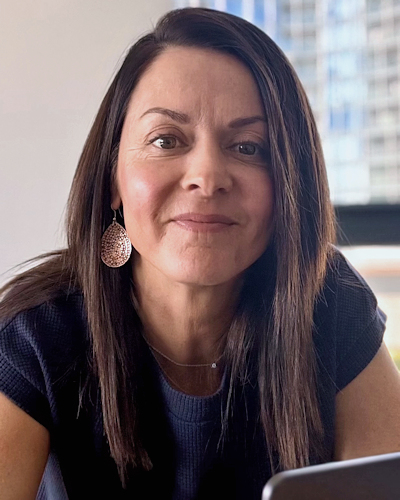
Ms Brooke Ericson
Counsellor
Rising Minds Counselling
Glenelg North, Adelaide SA 5045
In Person + Online Therapy Australia-wide
Philosophy & Vision
I’m Brooke, the counsellor behind Rising Minds Counselling, supporting young people aged 16–25 through phone and video across Australia, and in-person around Glenelg, SA by arrangement.
I see counselling as more than simply talking about what’s going wrong. It’s an opportunity to pause, make sense of what’s happening and explore what matters to you. I’m here to be in your corner, not to tell you how to live your life or make decisions for you. You help set the direction, and we work out the path together. You don’t need to know where to start or have all the answers.
My approach is down-to-earth and strengths-based, solution-focussed, incorporating elements of ACT, mindfulness and grounding techniques where useful. I bring curiosity, honesty, realness, kindness and respect for your independence into our conversations. You are the expert on your own life. My role is to help you access that, not override it.
Background
Originally from Southern California, I’ve called Australia home since 2005. After six and a half years in Broome, WA, I relocated to South Australia in 2012.
While I’ve always been curious about people, what makes them smile, what frustrates them and what truly matters to them, it wasn't until living in Broome that I recognised the importance of access to mental health support, wherever a person lives.
This experience prompted my studies into psychology then counselling. Gaining a deeper understanding of human behaviour and development affirmed my interest in counselling young people, and being able to offer my support beyond where I live. In my spare time, I enjoy being outdoors and amongst nature as much as possible.
Services
Initial FREE 15-Minute chat: Allows a chance to briefly share what's going on, ask questions
and see if counselling feels right for you.
Online and Phone sessions: Flexible session lengths with 45, 60, or 90-minute appointments available.
In-Person sessions are available in and around Glenelg, SA as walk and talk sessions.
Quality Provision
My priority is to create a safe, respectful space where each young person feels heard, valued and empowered to have a say in their support. Each session is tailored to individual needs of the client working alongside them rather than directing them. I take care to uphold confidentiality, protect privacy, and practise ethically supported by regular supervision and ongoing professional development. If needs fall outside my scope of practice I will discuss appropriate referral option
Areas of Interest
Accreditations
- Bachelor of Arts in Psychology - 2024 - Deakin University, Melbourne
- Graduate Diploma of Counselling - 2025 - Torrens University, Adelaide
Modalities
ACT - CBT - Integrative - Interpersonal - Mindfulness - Narrative Therapy - Strengths-Based
Therapy Approach
I believe counselling should feel like a genuine conversation, in a space where you feel comfortable, heard and free from judgement.
My approach is collaborative, with you guiding the direction and me helping navigate the conversations along the way.
Rather than focusing only on what’s going wrong, we’ll explore what’s important to you, what you’d like to change and what’s already working.
Drawing on solution-focussed and strengths-based approaches, ACT, mindfulness and grounding techniques, we’ll find practical ways to build on your strengths and move towards the changes that matter to you.
Professional Associations
- Australian Counselling Association
Practice Locations
14 Coorilla Avenue
Glenelg North SA 5045
For in-person sessions by pre arrangement, near Glenelg, SA parking is available in public areas nearby. Location to be confirmed at the time of booking. All other sessions by phone or video.
Appointments
Monday, Wednesday & Friday: 11am - 5pm
Tuesday & Thursday: 12pm - 6pm
Please note: Occasionally later evening and some weekend sessions are available via the online booking link provided
Fees & Insurance
Individual counselling sessions fees for online or phone sessions:
45 minutes | $90 | Express
60 minutes | $120 | Standard
90 minutes | $180 | In-depth
Payment Options
- Direct Deposit (details provided shown in the online booking form)
- Credit or Debit Card (no fees)
Full payment is due within 48 hours of an appointment. If a booking is made within 48 hours from the requested session full payment is due.
Contact Brooke
Ready to start? Book online or call first.
A conversation with Brooke Ericson
-
My move towards a career in counselling began with studying a degree in psychology, where I developed a strong interest in human development and what shapes us throughout our lives.
Adolescence particularly stood out to me. It is such a formative stage, bridging childhood and young adulthood, when identity, relationships, independence and understanding of ourselves are developing rapidly. I became increasingly interested in how experiences during these years can influence the foundations we carry into adulthood.
This helped me recognise just how important early support can be. Having someone who listens, and helps a young person make sense of what they are experiencing can have an impact that extends well beyond those formative years.
That understanding ultimately led me towards counselling and a desire to support young people during this important stage of life. -
My professional development has been influenced by person-centred and humanistic approaches, but what has shaped me most is an understanding of how important it is for people, particularly young people, to have someone they feel safe opening up and sharing what’s going on with.
My interest in adolescence has strengthened my belief in the value of support during these formative years. I see counselling as an opportunity to help young people make sense of themselves, their emotions and the experiences that are shaping them, while developing skills they can carry into adulthood.
I am also drawn to strengths-based thinking. Rather than focusing only on what is difficult or needs to change, I believe it is important to recognise what is already there: a person’s abilities, moments of resilience, personal insights and capacity to grow.
Ultimately, I see counselling as a collaborative process. Having someone outside your usual circle who will listen, ask the right questions and offer a different perspective can be the starting point for meaningful change. My hope is that the skills and self-understanding developed early can have an impact well beyond the individual, influencing how they approach relationships, challenges and eventually the people around them.
-
I am interested in the connection between our everyday habits and our overall wellbeing. Particularly how we cope with life’s challenges and how our choices around eating, movement and sleep influence how we feel and function in our everyday interactions and with ourselves.
I am particularly interested in helping young people recognise how their choices and consistent habits can shape their wellbeing, while developing healthy, adaptive ways of responding to what life brings. -
My approach draws on solution-focussed counselling, strengths-based practice, Acceptance and Commitment Therapy (ACT), mindfulness and grounding techniques.
I don’t follow a set formula or use the same methods in every session.
What we explore and the approaches we use depend on you, what you’re experiencing and what might be most helpful at the time. -
Progress often becomes noticeable when you start putting things we’ve discussed into practice outside our sessions and recognise positive changes in how you feel, think or respond.
It can also be when something that once felt difficult no longer needs the same attention because you’ve found a way to work through it. Progress looks different for everyone, and sometimes it’s the small changes that tell us the most. -
My own experiences with counselling have shown me the value of having an independent perspective, someone who can offer a different way of looking at things beyond my usual circle.
Reflective conversations have helped affirm my own capabilities, challenge my thinking and encouraged me to approach situations differently. That perspective is invaluable. -
What I value most is helping people realise they’re not alone in what they’re experiencing.
Sometimes the things we think make us different or difficult to understand are more common than we realise.
I like seeing people recognise that they’re not broken, that they are enough and that they have someone in their corner while they work through what matters to them. -
Sometimes I do then I tie it up in a ponytail or bun, let it go and get on with my day.
-
I think we’ve become increasingly disconnected from ourselves and what genuinely matters to us.
We can spend so much time measuring our worth against expectations from society, family, friends and even social media that we lose sight of what makes us feel good about ourselves and our place in the world.
I think we sometimes underestimate how much the basics of wellbeing matter beyond simply meeting our everyday needs. Good sleep, movement, time in nature and genuine social connection all play a part.
Finding our own reasons to make room for these things often starts with believing we’re worth the effort. -
One song that has always stayed with me is What a Wonderful World by Louis Armstrong.
I like its reminder to look beyond ourselves and appreciate the world around us, from the natural environment to the people we share it with.
I think that when we have a stronger sense of our own worth, we’re also better placed to recognise the value in others. It’s a simple message, but one I think we can sometimes lose sight of in everyday life.
What A Wonderful World Lyrics:
I see trees of green
Red roses too
I see them bloom
For me and you
And I think to myself
What a wonderful world
I see skies of blue
And clouds of white
The bright blessed day
The dark sacred night
And I think to myself
What a wonderful world
The colors of the rainbow
So pretty in the sky
Are also on the faces
Of people going by
I see friends shaking hands
Saying, "How do you do?"
They're really saying
I love you
I hear babies cry
I watch them grow
They'll learn much more
Than I'll ever know
And I think to myself
What a wonderful world
Yes, I think to myself
What a wonderful world
Ooh, yes