


- Carl Jung
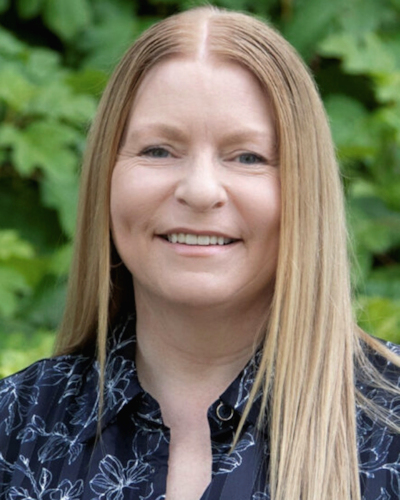
Ms Charlotte Hobbs
Counsellor, Relationship Therapist
Nepean Counselling Services
Frankston, Melbourne VIC 3199
In Person + Online Therapy Australia-wide
Philosophy & Vision
I am a Master of Counselling trained, clinically registered therapist.
I work from a nervous system regulation perspective because I believe it's the foundation that enables lasting change. I'm holistic and neuroscience-informed, looking at how your body, emotions, thoughts, and actions all interconnect. To support healing from past trauma, we need to guide your nervous system out of survival mode and into safety.
My goal is to help you understand what's happening in your nervous system, why you respond the way you do, and how to build genuine capacity for connection through safety.
Background
I began my professional career in finance as a bank manager, working within systems and developing business acumen. I transitioned into education, teaching children for over a decade. I gained deep insights and knowledge about child development, neurodiversity and family dynamics. After experiencing significant losses I was drawn into counselling.
During my Master of Counselling degree, I discovered another passion: working with men using emotional literacy and anger management.
Now I help couples break free from resentment cycles. This is where my energy and impact lies. I am passionate about teaching clients their nervous system, brain and body connections through a holistic focus.
Services
I primarily work with individuals and couples. My clients come to me navigating communication breakdown, resentment cycles, grief / loss, trauma, and/or domestic violence. I also work with men who want to develop emotional literacy and show up more effectively. I am highly experienced in neurodivergence and anger management. I have an education background, which shapes how I teach and guide clients through this work.
I deliver in-person Anger Management courses which are approved by the court networks.
Areas of Interest
Accreditations
- Master of Counselling - 2022 - Monash University
- Bachelor of Education (Primary) - 2015 - Deakin University
- Certificate of Education - 2012 - Deakin University
- MACA - 2026 - ACA
Modalities
ACT - Attachment Theory - CBT - Emotional Freedom Techniques - Emotionally Focused Therapy - Gottman Method - Internal Family Systems - Marriage and Family - Neuroscience - Person Centred - Schema Therapy - Somatic Psychotherapy - Strengths-Based - Trauma-Informed
Therapy Approach
I work from an integrative, neuroscience-informed approach combining evidence-based modalities tailored to each client. I primarily use Gottman Method for couples work, Polyvagal Theory and Somatic Experiencing for nervous system regulation, CBT and ACT for psychological flexibility, and Schema Therapy, Internal Family Systems and EFT for relational patterns.
I view therapy holistically — working with your thoughts, emotions, body, and nervous system together. I incorporate somatic techniques, psycho-education about your brain, and practical tools you can use between sessions.
My goal is to help you understand your patterns and build genuine capacity to change them.
Professional Associations
- Australian Counselling Association - Level 3
- Psychotherapy and Counselling Federation of Australia - Clinical
Practice Locations
435 Nepean Highway
Ground Floor
Frankston VIC 3199
Public transport including train and buses available. Public parking available around the practice location.
Appointments
Monday: 12pm-7pm
Tuesday: 12pm-7pm
Thursday: 12pm-7pm
Friday: 11am-5pm
Saturday: 11am-5pm
Or by mutual agreement outside of these hours.
Fees & Insurance
Please refer to my website for up to date fees schedule.
Private health fund rebates are available. Please discuss this with me during your free (15 min) initial phone consult.
Cancellation fees may apply if less than 24 hours notice is provided.
Payment Options
Please make a payment using PayId and mobile number, EFTPOS in person sessions, direct deposit into bank account, or cash.
Contact Charlotte
Please contact me to book a 15 minute free initial consult
A conversation with Charlotte Hobbs
-
About 15 years ago, I went through a profound loss experience which I did not find the right professional support for. I needed help to navigate such an unknown lived experience. So I decided to become the professional support. I went back to university to complete a Master of Counselling degree with the aim of becoming a grief counsellor in private practice. As my studies progressed, my passion shifted while I completed a placement supporting men completing an anger management course. Now I integrate grief and anger management into my private practice.
-
My professional philosophy is grounded in the work of Stephen Porges (Polyvagal Theory), Bessel van der Kolk (trauma and the body), Daniel Siegel (interpersonal neurobiology), and John Gottman (couples research). Together, these thinkers have shaped my understanding that healing happens when we recognise how the nervous system, brain, body, and relationships are profoundly interconnected.
Porges and van der Kolk taught me that trauma and dysregulation live in the nervous system, not just the mind. Siegel's work on integration and brain development guides how I help clients build new neural pathways and capacity for connection. Gottman's research on couples patterns, particularly his work on predictable relationship breakdowns, informs my approach to helping couples understand and transform their cycles.
My philosophy is fundamentally this: real, lasting change requires us to work with the whole person — nervous system, brain, body, and relational patterns together. -
I'm fundamentally interested in healing human suffering that originates in childhood experiences and resurfaces in adult relationships. I'm fascinated by how our early experiences become encoded in our nervous system and body, and how they shape the patterns we repeat in our most intimate relationships — with partners, children, and ourselves.
My work focuses on nervous system health and somatic experiencing because I believe that real healing requires us to work with the whole body, not just the mind. When someone comes to me stuck in resentment cycles, struggling with emotional expression, or carrying unprocessed grief and loss, we are ultimately working with nervous system patterns that formed long ago and are now playing out in real time.
I'm deeply interested in men's emotional development and literacy — helping men understand their nervous system, their patterns of disconnection or anger, and their capacity for genuine intimacy. I'm equally committed to couples resilience and helping partners break the destructive cycles that keep them trapped. I'm passionate about family healing across the lifespan — recognising that what happens in childhood, how we regulate our nervous system, and how we show up in relationships are all interconnected.
Ultimately, I believe that understanding the connection between our childhood, our nervous system, and our relational patterns is the pathway to genuine healing and freedom. -
I'm a client-centred, eclectic counsellor. This means I listen carefully to what you're presenting and work collaboratively with you to decide which methods will be most helpful for your situation. I meet you exactly where you are — not where I think you should be — and I'm flexible in how we work together.
Within that flexibility, I draw from a range of practices tailored to what you need: talk therapy to explore your patterns and history, somatic work and breathing practices to help regulate your nervous system, psycho-education about how your brain and body work, and practical tools to work with between sessions, and journaling to deepen self-awareness. Some sessions might be deeply conversational; others might involve body-focused work or specific techniques. I'm committed to finding what actually works for you, not what fits a predetermined framework.
My role as a counsellor is to be a collaborator in your healing — to bring my expertise, clinical knowledge, and lived experiences, while respecting your expertise about yourself.
Together, we figure out what methods serve your particular journey. -
Healing is deeply individual.
Progress looks different for everyone depending on your situation, your readiness to engage, and what you are working with.
We'll track what matters to you. -
I have done my own personal counselling throughout my life, including EMDR for childhood trauma and grief counselling for my own profound losses. This isn't academic for me — I know what it feels like to be dysregulated, to carry unprocessed pain, and to do the hard work of healing with a professional.
My lived experiences shapes everything about how I show up as a counsellor. I understand what my clients go through because I've been there. I know healing is possible but takes time and consistency. I've experienced the nervous system dysregulation, the reactivity, the patterns that feel impossible to break — and I've also experienced what real transformation feels like.
This has deepened my empathy and genuine understanding of the human journey toward healing. I'm not asking you to do anything I haven't done myself. -
What I love most about being a counsellor is witnessing people's breakthroughs and transformation. There's something profound about that moment when a client has an "Aha!" moment — when they suddenly understand a pattern that's been running their life, or they realise they have more agency than they thought. That moment of clarity and possibility is extraordinary.
I sit in a privileged position, walking alongside people's journeys of exploration and healing.
It is an honour to be trusted with someone's deepest struggles and vulnerabilities. I get to witness couples reconnect after being stuck in destructive cycles for years — to see them look at each other differently, to hear them communicate with genuine care again. I get to watch men understand their nervous system, develop emotional literacy, and show up differently in their relationships and families. I observe people reclaim agency over their lives — moving from "this is just how I am" to "I can choose differently."
There is a profound satisfaction in knowing that the work we do together creates ripples beyond my office. For example, a man who learns emotional literacy goes home and shows up differently for his partner and his children. A couple who breaks their resentment cycle models healthier relating for their family. An individual who reclaims their agency transforms not just their own life, but the lives of everyone around them.
That's what keeps me showing up. -
Absolutely, I do. Bad hair is the worst!!
But seriously, some sessions are tougher than others. Listening to people's pain, trauma, and relationship struggles is emotionally demanding work. I sit with people's grief, anger, shame, guilt and despair. Sometimes the work I do lands in my nervous system too.
I have brilliant compartmentalising skills, which helps me show up fully for each client without carrying their stories home with me. But in this work, I am also honest about this: sometimes my spoons are depleted. There are days when I'm exhausted from holding space for people's suffering, when my own nervous system needs regulating, when I need to step back and tend to myself. So I get out in nature when I need to replenish my spoons.
That's not a failure — it's necessary.
I practice the same nervous system regulation and self-care I teach my clients. I walk outside, I breathe, I move my body, I process my own experiences in therapy or supervision. I have boundaries around my work and my time. I know my limits and I respect them, because a burnt-out therapist cannot show up authentically for clients.
This vulnerability and self-awareness actually makes me a better clinician. Because I understand from lived experience what it means to be depleted, to need rest, to need support. I don't expect my clients to do anything I'm not willing to do myself — including prioritising their own wellbeing and nervous system health.
Self care matters. -
I think one of the most significant problems we face today is social disconnection driven by device usage — and the cascading nervous system consequences that follow.
I see this constantly in my work. Couples sit in my office unable to have a real conversation because they're habitually on their phones. They've lost the skills to sit with discomfort, to be vulnerable, to truly listen to each other. This lack of in-person communication fuels resentment cycles because intimacy dies when connection dies.
But there's a deeper issue: constant device usage creates chronic nervous system dysregulation. Sleep deprivation, the endless stimulation, the dopamine hits from notifications — these keep people in a state of activation. Parents are too dysregulated to regulate their children. Adolescents are losing the ability to read facial expressions, to navigate real-world social complexity, to be present with another human. We're raising a generation of young people who can't connect in person because they've never learned how.
This directly impacts every issue I work with. A couple can't break their resentment cycle if they can't communicate. Men can't develop emotional literacy if they're constantly escaping into their devices. Families can't heal if no one's actually present with each other.
The nervous system dysregulation from chronic device use makes everything harder — regulation, connection, resilience, agency.
We're losing the capacity for genuine human connection at exactly the moment we need it most. This is why the work I do — helping people reconnect with themselves, each other, and real presence — feels so urgent. -
I'm inspired by anything that pushes me forward in my knowledge and understanding.
Specifically, I'm deeply inspired by Brené Brown's work on shame and vulnerability — her research has fundamentally shaped how I hold space for clients' deepest struggles. The DOSE book on neurotransmitters helps me understand the biology of wellbeing and connection. Neuroscience learning — understanding the amygdala, the prefrontal cortex, how threat activates our nervous system — has been transformative for my clinical work.
Gabor Maté's trauma work opened my eyes to the profound connection between our early experiences and our physical and emotional health. But perhaps most significantly, Stephen Porges' Polyvagal Theory and Deb Dana's work bringing it into clinical practice really started opening my eyes to become a more holistic counsellor. Deb Dana's practical application of Polyvagal Theory shifted how I understand the nervous system, vagal tone, and the capacity for genuine regulation and connection. That theory alone changed the trajectory of my counselling practice.
What inspires me is the continuous learning — the expanding understanding of how the brain, body, nervous system, and relationships interconnect. Every time I deepen my knowledge, I become a better clinician. Every insight opens new possibilities for how I can help my clients. I'm committed to staying current, to challenging my own assumptions, and to letting new understanding reshape my practice.
That commitment to growth and learning is what keeps this work alive and meaningful for me.