


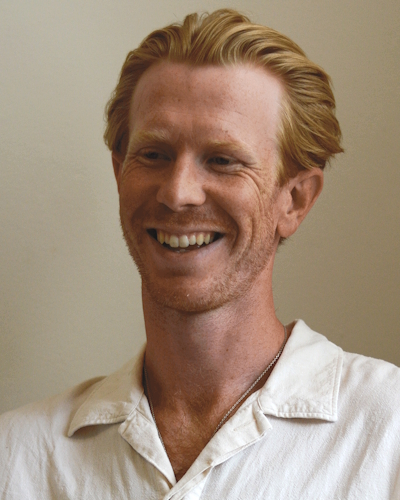
Mr Dillon Bensted
Psychotherapist, Integrative Psychotherapist
Oscillate Therapy
Murwillumbah, NSW 2484
In Person + Online Therapy Australia-wide
Philosophy & Vision
I’m Dillon, an integrative psychotherapist working with individuals and couples in Murwillumbah and online. I see therapy as a space to come up for air and give some attention to what’s been happening in your life. You might be feeling stuck, struggling in your relationships, or finding life harder to manage than it used to be.
I see my role as offering steady company and thoughtful attention to what’s difficult, including what hasn’t yet found words. Together, we can begin to understand what you’re carrying and find room for something to change. I draw on a range of ideas, guided by what they make possible for you. We can find ways to make sense of your experience that feel true to your life, opening up possibilities and choices that feel your own.
Oscillate offers a private, welcoming space, whether you’re seeking relief, understanding or deeper change, familiar with therapy or wondering if it’s for you.
Background
Before becoming a psychotherapist, I worked in construction, farming and hospitality. Those years continue to shape how I listen and relate to people, and my respect for the knowledge that comes from lived experience. They also inform my interest in making therapy accessible to people who may feel unsure or out of place in traditional therapy settings.
I hold a Bachelor of Counselling and Psychotherapy from Ikon Institute of Australia, where I received the Outstanding Student Award for academic performance, leadership and practice. I’m registered with PACFA and ACA and have completed additional training in the Gottman Method and Metacognitive Interpersonal Therapy.
Services
Quality Provision
I’m registered with PACFA (Psychotherapy and Counselling Federation of Australia), whose ethical and professional standards guide my practice. Regular clinical supervision and ongoing professional development support me to reflect on my work, deepen my understanding, and remain attentive to the quality of care I offer.
Areas of Interest
Accreditations
- Bachelor of Counselling and Psychotherapy - 2025 - Ikon Institute of Australia
Modalities
Existential - Gottman Method - Integrative - Psychodynamic - Systems Theory
Therapy Approach
My approach is integrative and collaborative, guided by three commitments: agency, privacy and possibility. I’m interested in understanding how you’ve adapted, what has helped you through, and where those patterns may now feel limiting. Together, we find a shared language grounded in your experience, with respect for what you choose to share, making sense of what’s happening and exploring how you might relate to it differently. Whether you’re seeking relief or deeper change, my aim is to support greater clarity, room to move, and choices that feel your own.
Professional Associations
- Psychotherapy and Counselling Federation of Australia
Practice Locations
Suite 5, Level 1, 2-4 Commercial Rd
Murwillumbah NSW 2484
There is ample parking in the area, with the Murwillumbah parking garage across the street. Unfortunately, due to the age of the building, I don't have disability access to my office on the 1st floor.
Appointments
I am available Mon-Fri, 9:30-5:30. However, I am happy to make arrangements for people unable to attend within those hours (Work commitments, children etc.)
Fees & Insurance
Session fees are $120 for individuals and $180 for couples, with a limited number of sliding-scale concession spots for clients experiencing financial hardship. Whilst I don't offer rebates, I match the average out of pocket fee. 15min calls provided
Contact Dillon
Please contact me to book a 15 minute free initial consult
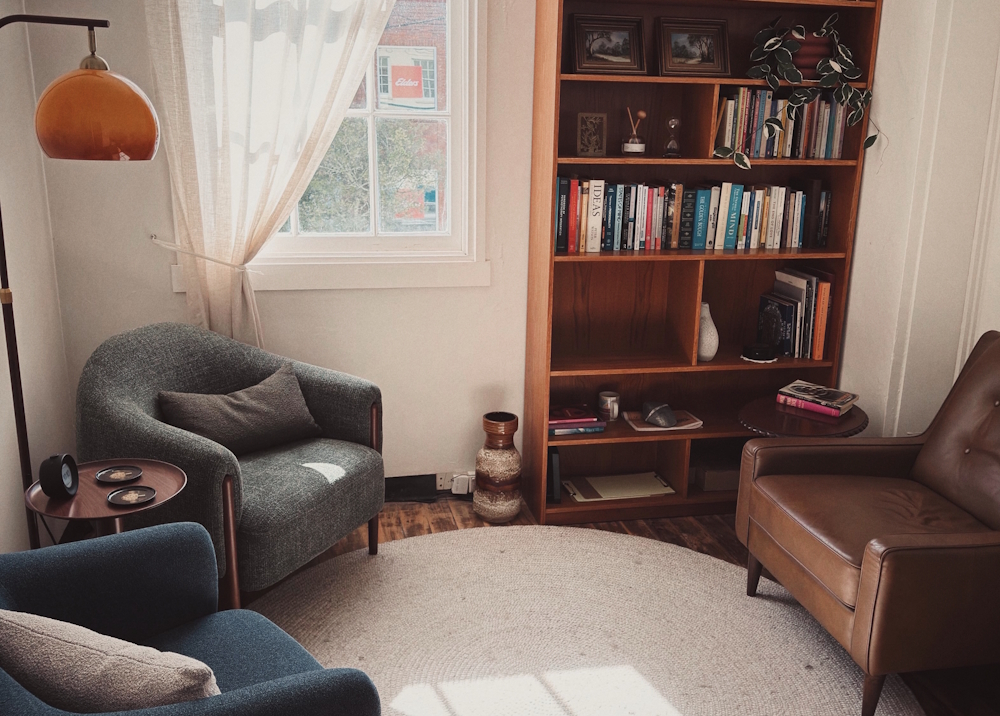
A conversation with Dillon Bensted
-
Psychotherapy has felt more like a vocation than a deliberate career choice. By vocation, I mean a sense of being drawn towards something that lay outside my plans and imagination. The careers I initially chose were hospitality and film; psychotherapy was something I gradually found my way to, led by a curiosity that kept deepening.
There’s an idea that a vocation lies where what draws us meets something the world needs, and that feels close to my experience. Alongside my interest came a growing sense of responsibility to develop what my experiences and dispositions might allow me to offer. Following that curiosity began to feel like something worth dedicating myself to.
What I value about psychotherapy is the continuity it allows across the different parts of my life. The things I read, the relationships I have, and what I encounter in everyday life all enter into how I listen and understand, while the work continues to shape how I live. There is something meaningful to me in that ongoing exchange, and I feel privileged to be part of a profession in which curiosity and care can become a way of contributing to another person’s life. -
Psychodynamic thought forms the ground of my work. What I take from it is a willingness to take symptoms, patterns and behaviour seriously, to remain curious about what they might mean and allow them to lead us somewhere we hadn’t anticipated. Something that initially seems confusing or self-defeating may begin to make sense as we come to understand more of the person’s life.
Pragmatism (particularly the work of Richard Rorty) has also been an important influence. It encourages me to hold ideas with some lightness and remain interested in what they make possible. In therapy, this means asking how a particular way of understanding things might help someone move towards the life they want. An idea can offer something useful without becoming the final word on who a person is, and I value that freedom to keep discovering and revising our understanding together.
Phenomenology helps balance these more theoretical influences by bringing me back to what someone is experiencing here and now, including what they can feel but may not yet have words for. It encourages patience with experience as it takes shape, attention to sensation, movement and feeling, and respect for what we may know through our bodies before we can explain it. For me, this means allowing what happens in the room to inform and sometimes change the ideas I bring. -
I’m drawn to the image of the wounded healer, associated with Carl Jung, and the possibility that our own encounters with difficulty can deepen our capacity to understand and care for others. It speaks to something I value in psychotherapy: a recognition that we are involved in the same human journey, each with our own experiences of vulnerability, adaptation and change.
I tend to understand mental health in the context of the relationships and communities we live within. While distress can take a particular shape in each person’s life, it may also tell us something about the world we share, what it asks of us, and the support available to meet those demands. I’m interested in how we find belonging, how we carry one another through difficult periods, and how our experiences of being cared for might shape what we can offer in turn.
Across a life, we will likely find ourselves both giving and receiving care, sometimes in ways we hadn’t imagined we would need. There is something in that shared vulnerability that feels central to my work. Ram Dass puts it simply: “We’re all just walking each other home.” -
My training includes Metacognitive Interpersonal Therapy (MIT) and the Gottman Method, alongside a Bachelor of Counselling and Psychotherapy grounded in an integrative framework. I also draw inspiration from the NeuroAffective Relational Model (NARM) and the Conversational Model.
Underlying these influences is a common-factors perspective: an interest in what helps therapy become useful across different approaches. For me, this begins with a relationship in which we can think together, develop a shared understanding of what is happening, and find some confidence that change is possible.
Within that relationship, I’m attentive to some basic movements: becoming more able to listen to and be informed by emotion, recognising patterns, making sense of experience, and discovering choices that may have been difficult to see. I’m interested in how understanding can become something you can use in your life, bringing a greater sense of agency and room to respond differently.
I’m mindful that a therapy model can help someone understand their experience while also narrowing how they see themselves. A new vocabulary may bring relief and clarity, but becoming persuaded by an explanation can sometimes be mistaken for a deeper change. I’m interested in whether that understanding reconnects you with your own sense of choice, opens possibilities, and helps you feel that the direction you take is yours. This is why I value keeping our ideas open to change as the work unfolds.
Integration gives me a framework for bringing these influences into conversation with your experience, allowing each to offer something while remaining open to what we discover together. I hope this gives our work both direction and flexibility, so that how we work can change as your understanding deepens and what you need becomes clearer. -
I like Adam Phillips’ suggestion that psychotherapy begins when people become curious about their symptoms. For me, this speaks to a change in how we relate to what troubles us, when something that has felt fixed or inevitable begins to invite questions and other possibilities.
I’m also drawn to his idea of finding different ways of being in our problems. The word “progress” doesn’t quite capture this for me, because change may involve finding more room to move within a difficulty that is still part of our lives. We might notice a familiar feeling and respond differently, speak about something we’ve struggled to express, or find ourselves able to make a choice where there previously seemed to be none. Over time, the problem may become less defining as more of life becomes available to us.
When this begins will be different for each person. I’d want us to stay curious about what you’re noticing, both in our conversations and in everyday life, and whether you’re finding more freedom in how you meet what is happening. -
Therapy has kept me curious and changed my relationship with uncertainty. What might once have felt like something to dread has become, at times, a source of inspiration, a sense that there is still something to discover.
It has helped me become more present, authentic and responsive in my relationships, and brought me closer to the vitality of having a say in my own life. I feel more able to make decisions without needing to know exactly where they will lead, and to recognise myself in the choices I make. -
Being a therapist keeps me close to the living density of things, the gritty untidiness of life as it is being lived. I have a love of ideas, and with that comes a tendency to wander a little too far from the pulse of an actual encounter. This work keeps bringing me back to the person in front of me, to what is happening between us, and to all that an idea might leave out.
I consider it an absolute privilege to be trusted with someone’s experience and invited to accompany them through part of their life. I learn so much from my clients, including about myself: the assumptions I carry, the limits of my understanding, and the different ways a life can be lived. Their trust asks something of me, and I value how the work keeps drawing me towards a more attentive, grounded and simple presence. -
Absolutely. I have days when I feel tired, distracted, or just a little out of step. I’m learning how important it is to make room for this instead of trying to be the “perfect” therapist (perfectionism being its own kind of imperfection anyway). The wish to get everything right can make it harder to stay present and open to what is actually happening.
My deeper commitment to the work helps me stay curious about a slip-up, rather than turn it into a verdict on my adequacy. There may be something in it I need to understand, learn from, or put right. What I’ve come to value is how we wear these moments, including being able to hear when I’ve misunderstood someone or missed something that mattered, and taking responsibility for how we go on from there. -
I’m concerned by what feels like a breakdown in our capacity for relationship, particularly our willingness to be affected by one another. We can become so invested in having our view of the world confirmed that there is little room for an encounter to surprise us or change our minds.
Ideas and beliefs can help us find one another, but they can also become ways of keeping people at a distance. We may find ourselves listening for agreement, or preparing a defence, while the person in front of us never quite gets through. There is something lonely in this, a sense that the only voice we can trust is the echo of our own.
What I value in relationship is the possibility of being changed by attention, of allowing someone to come close enough that we can no longer see things quite as we did before. I think something important is at stake in our willingness to risk that, to remain curious about one another even when what we encounter unsettles us. -
The writing of Roberto Calasso is a continuous source of inspiration, particularly for the sense of process and movement in his work. I’m drawn to the way his writing lets one thing lead into another, opening connections that change how something feels or what it might mean. What stays with me is often the experience of following his attention, rather than any particular conclusion.
In film, I’m drawn to Peter Mettler’s documentaries and Derek Cianfrance’s narrative work, and in painting, Hieronymus Bosch’s *The Garden of Earthly Delights*. Each, in a different way, gives me something I can keep returning to, with the possibility of finding it changed by what I bring to it.