


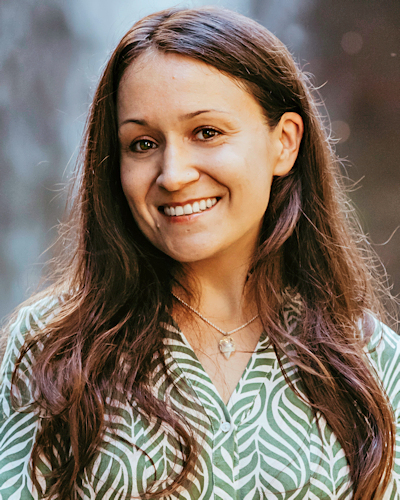
Katia Erokhina
Counsellor, Psychotherapist
Relational Home
Newrybar, NSW 2479
In Person + Telehealth
Philosophy & Vision
Hi, I’m Katia. I am a Certified Practicing Counsellor and a Master’s-qualified Gestalt Psychotherapist, working with individuals and couples both in person and online. I believe that therapy should be a warm and human experience, rather than cold or impersonal.
I offer a warm, collaborative space where you can explore your experiences while being met with curiosity, support, and genuine connection.
I support individuals and couples navigating relationship difficulties, anxiety, chronic stress, life transitions, and challenges related to addiction and compulsive behaviours. I have a particular interest in supporting neurodivergent adults, including autistic adults and adults with ADHD.
Background
I grew up in Russia and moved to Australia in 2011, starting again in a new country and a new culture. I studied accounting here and worked as an accountant before realising that my curiosity about people, relationships and what makes us who we are was pulling me somewhere very different.
That path eventually led me to Gestalt therapy, a Master of Gestalt Therapy and private practice. More recently, discovering that I am autistic and ADHD in adulthood brought another dimension to my story and has deeply influenced my interest in neuroaffirming therapy. My journey has involved immigration, changing careers, adapting, and finding my own way and these experiences continue to shape how I meet people in my work.
Services
I offer psychotherapy and counselling for adults and couples, with a particular interest in relationships, neurodivergence, anxiety, overwhelm, life transitions and chronic illness. My approach is relational, trauma-informed and neuroaffirming, grounded in Gestalt psychotherapy and informed by contemporary couples therapy approaches. Sessions are available in person in the Northern Rivers and online across Australia. I also offer a free 15-minute introductory call for new clients.
Quality Provision
I am a PACFA-registered Certified Practising counsellor and psychotherapist and work within PACFA’s ethical and professional standards. I undertake regular clinical supervision and ongoing professional development, with additional training in couples and relationship therapy and neuroaffirming practice. I am committed to reflective, ethical and culturally responsive practice, with attention to each person’s individual needs, context, identity and ways of experiencing the world.
Areas of Interest
Accreditations
- MAGest Therapy - 2024 - GTB
Modalities
Attachment Theory - Dialogical Practice - Dream Work - Gestalt - Gottman Method - Sandplay Therapy - Strengths-Based - Trauma-Informed
Therapy Approach
My approach is relational, Gestalt-based, trauma-informed and neuroaffirming. I explore experiences in the context of relationships and the environments we live in, with curiosity about what is happening in the present. For neurodivergent people, I can also work in a more practical, solution-focused way, supporting everyday challenges, self-understanding and finding strategies that fit the person rather than expecting the person to fit the strategy. With couples, I also draw on EFT, Gottman Method and Relational Life Therapy.
Professional Associations
- Gestalt Australia & New Zealand
- Psychotherapy and Counselling Federation of Australia
Practice Locations
Old Byron Bay Rd
Newrybar NSW 2479
In-person sessions are available in Mullumbimby and Newrybar, with free parking nearby. The Mullumbimby practice room is located upstairs and is accessed via stairs. Please contact me before booking if you have accessibility needs so we can discuss.
Centre for Mind Body Wellness
Shop 2/108 Stuart St
Mullumbimby NSW 2482
Appointments
I offer daytime and some afternoon/evening appointments throughout the week, in person in the Northern Rivers and online Australia-wide. You can view current availability and book directly via the booking link on my profile.
Fees & Insurance
Individual sessions are $150 (60 min) and couples sessions $210 (90 min), with reduced fees available for regular ongoing therapy.
Languages
English
Russian
Payment Options
Payment is due at the time of your session. I accept card and electronic payments.
Contact Katia
Please book online to make an appointment
A conversation with Katia Erokhina
-
My path to psychotherapy wasn’t a straight one. After immigrating to Australia, I studied accounting and worked as an accountant, but I was always far more curious about people than numbers. My own experiences of migration, relationships, change and later discovering my neurodivergence deepened that curiosity. Finding Gestalt therapy felt like finding a language for something I had long been interested in: how we become who we are through our relationships, experiences and the worlds we live in.
-
My work has been strongly influenced by Gestalt therapy, particularly its existential, phenomenological and relational foundations. I am drawn to the idea that people cannot be understood separately from their relationships, environments and wider social context. Humanistic and neurodiversity-affirming perspectives have further shaped my practice, supporting an approach grounded in curiosity, dialogue and respect for different ways of experiencing and making sense of the world.
-
I’m particularly interested in how we find a way of being ourselves while staying connected to others. This includes relationships and intimacy, belonging, identity, neurodivergence, chronic illness, major life transitions and the ways we adapt when life asks something unexpected of us. I’m also fascinated by how our relationships and environments shape us, and what becomes possible when we begin to understand ourselves with greater curiosity rather than judgement.
-
My work is grounded in Gestalt psychotherapy and a relational, trauma-informed and neuroaffirming approach. With neurodivergent people, I can also offer a more structured approach using psychoeducation, collaborative problem-solving, executive-function support and practical strategies around sensory needs, routines, communication, overwhelm and everyday functioning. In couples work, I integrate EFT, the Gottman Method and Relational Life Therapy (RLT) within a relational Gestalt foundation.
-
This varies from person to person and depends on what brings you to therapy. Some people notice a shift within the first few sessions through greater understanding, relief or having something practical to work with. Longer-standing relational or emotional difficulties often take more time. I regularly check in about how therapy is going so we can notice what is changing, what is helpful and whether we need to adjust our approach.
-
Therapy has been an important part of my own life for many years. It has helped me understand myself and my relationships more deeply, navigate significant changes and losses, and become more aware of the ways I adapt to the world around me. It has also taught me that meaningful change is rarely neat or linear. My experience of being a client continues to shape my respect for how vulnerable, challenging and sometimes transformative the therapeutic process can be.
-
What I value most is being able to sit alongside people in experiences that can feel painful, confusing or lonely. There is something deeply meaningful to me about creating a steady and supportive space where someone does not have to carry what they are going through alone, and where their pain can be met with care, curiosity and without judgement.
-
Absolutely. Some days my hair has its own therapeutic process, and I’ve learned not to interfere with it.
-
Disconnection. From each other, from our communities, from the natural world and sometimes from ourselves. We are increasingly expected to function as self-sufficient individuals, while humans are fundamentally relational. I think many of the difficulties we face become harder when people feel isolated, unseen or as though they have to manage everything alone.
-
There are a few very different things that inspire me. Irvin Yalom’s writing has stayed with me for years! I love his willingness to sit with the big, uncomfortable questions of being human: meaning, mortality, freedom, responsibility and connection.
I also love the movie "Interstellar". Something about the exploration of time completely fascinates me and how small we are in the scale of the universe, and yet how enormously significant our relationships can feel within one human life. And then there are white reindeer calves. I once came across an account describing how white reindeer calves can sleep incredibly deeply, sometimes remaining asleep when others are already alert and on the move. I found this so moving. They are not failing at being reindeer; they are simply different and may move through the world differently.