


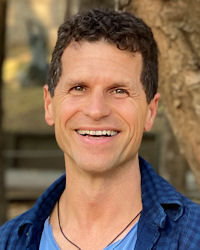
Mr Rob Gray
Art Therapist, Psychologist
CECAT College for Educational and Clinical Art Therapy
Elizabeth Beach, Elizabeth Beach NSW 2428
In Person + Online Therapy Australia-wide
Philosophy & Vision
Art Therapy with Rob Gray
People come to me when something is holding them back — a weight they can't name, a pattern that keeps returning. Often they can't find words for it. That's not a failure. The most formative experiences of our lives are stored not as words, but as images and felt sense.
Through drawing, painting, or collage, unconscious material surfaces that has been waiting to be seen. Art reaches what talking often cannot.
I use the iceberg image: what we're aware of is only the tip. Art therapy dives beneath — into what quietly drives how we feel, how we relate, and why change feels so elusive.
This is what I have spent over thirty years learning. And it is what I now teach.
Training in art therapy means developing a fundamentally different understanding of human experience — one that takes seriously the unconscious, the wisdom held in the body, and the power of creative expression to initiate real
Background
I trained at the Munich Academy of Fine Arts before completing a Bachelor and Honours in Psychology, a Master of Art Therapy, and a Master of Theology. That breadth was deliberate — art therapy, at its best, holds the psychological, the creative, and the human spirit together.
I am the founder and director of the College for Educational and Clinical Art Therapy (CECAT), and the author of Art Therapy and Psychology, published by Routledge. Over thirty years of clinical practice and teaching across more than forty countries has shaped everything I bring to this work.
Services
I offer face-to-face art therapy sessions for individuals, couples, and families from my practice in Forster-Tuncurry, NSW. Alongside my clinical work, I teach art therapy through CECAT — one of Australia's most established training pathways — offering three courses that equip practitioners with the skills to bring this work into their own professional lives.
Whether you are seeking personal therapy or professional training, what I offer is grounded in over thirty years of clinical practice and shaped by teaching across more than forty countries.
Quality Provision
The code of conduct of the Australian Psychological Society and the Australian and New Zealand Art Therapy Association applies at all times and guarantees you a high standard of professionalism and care.
Areas of Interest
Accreditations
- BA (Hons) Theology - 1993
- MA Theology - 1998
- Grad Dip Pastoral Counselling - 1998
- MA Art Therapy - 2001
- B Soc Sc (Hons) (Psychology) - 2007
Modalities
Art Therapy - Attachment Theory - CBT - Christian Counselling - Compassion-Focused Therapy - Creative Arts Therapy - Dance Movement Therapy - Developmental - Dream Work - Ecological Psychotherapy - Emotional Release - Emotionally Focused Therapy - Experiential - Inner Child - Integrative - Interpersonal - Journal Therapy - Jungian - Marriage and Family - Meditation - Mindfulness - Narrative Therapy - Person Centred - Psychodynamic - Sandplay Therapy - Schema Therapy - Short-term Psychodynamic - Solution Oriented - Somatic Experiencing® - Somatic Psychotherapy - Soul Centred Psychotherapy - Strengths-Based - Trauma-Informed
Therapy Approach
No art skills required! Art therapy is not about creating works of art but giving you another means of expressing yourself. Using a live video set up enables the art therapist to work with your pictures online. After the online session is finished, you may be asked to do a drawing in your own time and review it in your next session. This will give you time to complete your picture at your own pace.
Professional Associations
- Australian Association of Psychologists Inc
- Australian Psychological Society
- Australian, New Zealand and Asian Creative Arts Therapies Association
Practice Locations
2 Palmtops Ave
Elizabeth Beach NSW 2428
Free parking
Appointments
Monday-Friday, 9am-4pm.
Please contact me through my website
Fees & Insurance
Sessions: $300 per hour. A Medicare rebate is available with a GP referral. CECAT courses range from $480 (Introduction) to $7,680 for the full Certificate and Diploma pathway.
Languages
English
German
Payment Options
Course enrolments are processed through the website. For face-to-face art therapy, payment is by direct bank transfer. I find that committing to three sessions from the start gives the work the space it needs to unfold meaningfully.
Contact Rob
Please contact me for more information
A conversation with Rob Gray
-
It wasn't a straight line. I studied art and theology in Munich, then psychology — and somewhere in that wandering I realised they were all asking the same question: what does it mean to be human, and how do we change? Art therapy was the answer that held all three together. I didn't choose it so much as arrive at it.
-
Depth psychology — Jung especially — gave me permission to take the unconscious seriously. Theology taught me that suffering has meaning if we're willing to sit with it long enough. Humanism kept me anchored to the person in front of me rather than the diagnosis. And thirty years of clinical work has been the most demanding philosophical education of all.
-
Depth psychology — Jung especially — gave me permission to take the unconscious seriously. Theology taught me that suffering has meaning if we're willing to sit with it long enough. Humanism kept me anchored to the person in front of me rather than the diagnosis. And thirty years of clinical work has been the most demanding philosophical education of all.
-
I work with drawing, painting, collage, and other creative expressions as the primary language of the session. Beneath that, my framework is psychodynamic, humanistic, and cognitive-behavioural — depending on what the person needs. I am also a registered psychologist, which means I can move fluidly between depth work and structured approaches when that serves the client better.
-
Often sooner than they expect — not because the problem is solved, but because something shifts in how they relate to it. When a person can look at what they've made and say that's it, that's exactly it — there is already movement. Being truly seen, even by oneself, is itself therapeutic. The image often arrives before the words do.
-
Profoundly. I wouldn't teach what I haven't lived. My own therapeutic journey taught me that insight alone doesn't change us — something deeper has to move. That humility stays with me in every session. I know what it is to sit on the other side of the process, and I don't take lightly what people bring me.
-
Witnessing the moment a person reclaims something they thought was lost. It never becomes ordinary. After thirty years I still feel the privilege of being trusted with what people rarely show anyone else. And teaching others to hold that trust — passing it on through CECAT — has given the work a reach I could never have managed alone.
-
Of course. I live near the beach, I go for long walks, and some days the sea wind wins. But professionally — yes, those days exist too. Days when I question whether I reached someone, or whether I said the right thing. I think that discomfort is necessary. The day I stop asking those questions is the day I should stop practising.
-
Disconnection — from ourselves, from each other, from meaning. We have more information than any generation in history and less wisdom about what to do with it. People are drowning in the visible and starving for depth. In a strange way, that is exactly what art therapy addresses — one person at a time.
-
Jung's The Red Book. It is one of the most extraordinary documents in the history of psychology — a man descending deliberately into his own unconscious and painting what he found there. It is proof that the creative and the psychological are not separate endeavours. Every time I open it I am reminded why this work matters.