


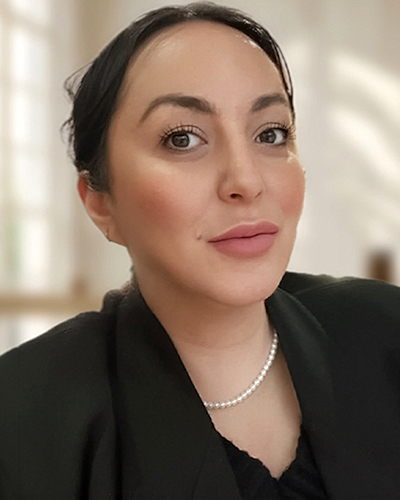
Sally Estepho
Psychotherapist, Counsellor
InBloom Therapy
Melbourne, VIC 3059
In Person + Online Therapy Australia-wide
Philosophy & Vision
I support children, adolescents, adults, couples, and families navigating anxiety, depression, trauma, grief, ADHD, ASD, OCD, behavioural concerns, emotional regulation difficulties, and life transitions. As a PACFA-registered Counsellor and Psychotherapist, I provide a safe, supportive space to build coping skills, confidence, and resilience. My approach integrates talk therapy, play therapy, art therapy, and sensory-informed interventions tailored to each client's needs.
Services
I provide individual, child and adolescent, and adult therapy; couples counselling; family therapy; and support through sensory-based interventions.
Quality Provision
InBloom Therapy provides compassionate, client-centred counselling and psychotherapy services for children, adolescents, adults and families, with a focus on creating a safe, inclusive and supportive therapeutic environment.
Areas of Interest
Accreditations
- PACFA Certified Practising Counsellor
- Graduate Diploma of Counselling (ACAP)
Modalities
Art Therapy - Person Centred - Play Therapy - Trauma-Informed
Therapy Approach
I use a client-centred approach that may include talk therapy, play therapy, art therapy, and sensory-informed interventions. In our first sessions, we will explore your concerns, goals, and strengths to better understand what support you need. Together, we will develop practical strategies that feel meaningful, supportive, and tailored to your unique situation.
Professional Associations
- Psychotherapy and Counselling Federation of Australia
Practice Locations
Melbourne VIC 3059
Appointments
Monday to Saturday, 9am–5pm
Fees & Insurance
General therapy sessions are $193.99, while couples and family sessions are $260. Special pricing on session packs is available. Please contact InBloom Therapy to discuss fees and the most suitable support options for your needs.
Contact Sally
Please contact me to make an appointment
A conversation with Sally Estepho
-
I've always been fascinated by people—the stories we tell ourselves, the experiences that shape us, and the incredible capacity we have to adapt and grow.
Becoming a therapist felt like a natural way to combine curiosity with compassion. There's something deeply meaningful about creating a space where someone can stop carrying everything alone and begin to make sense of their life. -
I believe there isn't a single "right" way to do therapy because no two people are the same.
My work is grounded in person-centred therapy, which means building a genuine, collaborative relationship where clients feel heard, respected and understood. From there, I draw on Cognitive Behavioural Therapy (CBT), creative therapy and art therapy, solution focused therapy and acceptance commitment therapy, tailoring each approach to suit the individual rather than expecting them to fit a particular model.
I see therapy as a shared journey—one that values curiosity, flexibility and the belief that meaningful change happens when people feel safe enough to explore their own strengths and possibilities.
-
I'm interested in the moments when life doesn't go to plan—loss, change, anxiety, burnout, relationship challenges, or simply feeling stuck. These experiences can be painful, but they can also become turning points.
I'm fascinated by resilience—not as "bouncing back," but as learning new ways to move forward while staying true to who we are. I also believe that creativity can play an important role in healing, helping people express thoughts and emotions that are sometimes difficult to put into words. -
Every person who walks through my door brings a different story, so I don't believe in a one-size-fits-all approach.
I use a blend of person-centred therapy, CBT, creative therapy and art therapy, carefully tailoring each session to the individual's needs, goals and strengths. Sometimes that means learning practical strategies to manage difficult thoughts and emotions, and other times it means exploring experiences through conversation, creativity or reflection.
My aim is always to provide therapy that feels meaningful, engaging and relevant to the person sitting in front of me. -
Progress often starts before life looks different on the outside. It might be noticing a thought without believing it, responding differently in a difficult conversation, or treating yourself with a little more kindness than you did last week. Those small shifts tend to build momentum.
Therapy isn't about becoming a different person—it's about feeling more like yourself. -
Therapy has reminded me that everyone has blind spots, and that's part of being human. It's helped me become more comfortable with uncertainty, more compassionate toward myself and others, and more willing to ask for support when I need it. Those experiences continue to shape the way I show up for my clients and reinforce my belief that growth is possible at any stage of life.
-
I love witnessing those moments when something suddenly makes sense. Seeing someone realise they're stronger than they thought, or watching their confidence grow as they overcome challenges, is incredibly rewarding. Every person I meet teaches me something about resilience, courage and the many different ways people find their path forward.
-
Absolutely! I'm human first and a therapist second. I have days when things don't go to plan, when I spill my coffee, lose my keys or my hair has a mind of its own. Those moments remind me that perfection isn't the goal—for any of us. Sometimes the healthiest thing we can do is laugh, be kind to ourselves and keep going.
-
I think many people are feeling increasingly disconnected—from themselves, from one another and from the things that give life meaning.
We're constantly connected through technology, yet genuine connection and time to simply be ourselves can be hard to find. I believe creating spaces where people feel heard, accepted and understood is more important than ever. -
One quote I often return to comes from Viktor Frankl: "Between stimulus and response there is a space. In that space is our power to choose our response."
It reminds me that while we can't always choose what happens to us, we can learn to choose how we respond. That small space is often where hope, resilience and meaningful change begin.