


- Carl Rogers
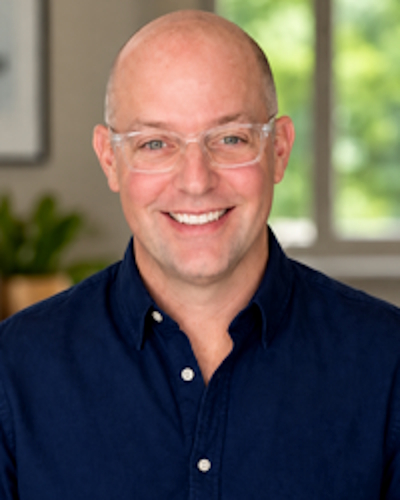
Sebastian Kinne
Counsellor, Psychotherapist
Sebastian Kinne, PhD
Coogee, Sydney NSW 2034
In Person + Telehealth
Philosophy & Vision
I see therapy as a collaborative process — a space to explore both difficulties and possibilities. My approach is person-centred, emotionally attuned, and informed by somatic awareness, meaning I pay close attention not only to thoughts but also to feelings and what shows up in the body. I often work with people experiencing anxiety, depression, stress, relationship concerns, and life transitions, as well as those drawn to questions of meaning, growth, and identity. Having lived and worked internationally for many years, I bring a sensitivity to cultural background, migration, and belonging. Whether in short-term support or longer-term depth work, my aim is to provide a safe and respectful environment where clients can reconnect with their own resources, develop clarity, and move toward more authentic ways of living.
Background
My professional background spans consulting, academia, and psychotherapy. After many years working with organisations and people through periods of change, I became increasingly drawn to work that was more directly relational and person-centred. This led me to train in psychotherapy and counselling and to work in community and trauma-informed settings. Today, I bring together these different strands of experience in private practice, combining thoughtful professional practice with a grounded, human approach.
Services
I offer counselling and psychotherapy for individuals, couples and groups, creating a safe and collaborative space for growth and change. Alongside in-person sessions, I provide online video and phone consultations, as well as walk-and-talk therapy and home visits for those who prefer a more dynamic, flexible or familiar setting.
Whether short-term or ongoing, sessions are shaped around each client’s needs and goals. Support for family conflict is offered through individual, parenting or couples work; whole-family therapy is not currently offered.
Quality Provision
I provide a professional, confidential, and respectful service that is client-centred and tailored to individual needs. My practice is informed by current evidence, regular supervision, and ongoing professional development, ensuring a safe and supportive environment for personal exploration and growth.
Areas of Interest
Accreditations
- Master of Counselling and Psychotherapy - 2025 - Western Sydney University
- Ph.D. in Management and Organisational Theory - 2010 - University of Sydney
Modalities
Attachment Theory - Buddhist Psychotherapy - Compassion-Focused Therapy - Emotionally Focused Therapy - Existential - Experiential - Inner Child - Integrative - Interpersonal - Marriage and Family - Meditation - Mindfulness - Neuroscience - Person Centred - Process Oriented - Somatic Psychotherapy - Systems Theory - Transpersonal - Trauma-Informed
Professional Associations
- Australian Association of Buddhist Counsellors and Psychotherapists
- Psychotherapy and Counselling Federation of Australia
Practice Locations
57 Dudley Street
Coogee NSW 2034
Appointments
I offer appointments on Monday, Tuesday, and Friday between 9:00am and 2:00pm. Sessions are available in person in Coogee or online via secure video.
Fees & Insurance
Individual: $160/60 minutes. Couples: $260/90 minutes. Groups: $60/90 minutes within a 120-minute container. Sliding scale and a free initial consult are available. No Medicare rebates. Details: sebastiankinne.com/fees/
Languages
English
German
Payment Options
• In-person card payments (EFTPOS and Credit/Debit Card)
• Direct Bank Transfer or PayPal (prior to or at end of session)
Contact Sebastian
Please contact me to make an appointment
A conversation with Sebastian Kinne
-
I came to psychotherapy after many years working in business and consulting, alongside a longstanding interest in how people make sense of themselves, relate to others, and navigate change. Over time, I felt increasingly drawn to working more directly with people and their inner and relational lives, while continuing to value the wider organisational and social contexts in which those lives unfold. That interest eventually led me to train in counselling and psychotherapy and to make it a central part of my professional work.
-
My work is strongly influenced by the humanistic tradition, especially the person-centred philosophy of Carl Rogers, which emphasises empathy, authenticity, and unconditional positive regard as core conditions for change. I also draw on existential perspectives concerned with meaning, freedom and responsibility, and on contemporary insights from interpersonal neurobiology.
In practice, this means paying close attention not only to thoughts and stories, but also to emotions, bodily experience and the felt sense of what may be difficult to put into words. -
I am particularly interested in how people navigate periods of transition — whether that’s coping with anxiety, depression, or loss, or moving through changes in relationships, identity, or life direction. I’m drawn to the ways individuals make sense of their experiences and reconnect with inner resources during such times. I’m also interested in questions of meaning, belonging, and personal growth, and how body, mind, and emotions interact in shaping our wellbeing.
-
I use a person-centred approach, which means I pay close attention to each person’s experience and work collaboratively rather than applying a fixed set of techniques. I aim to offer a thoughtful, supportive space in which clients can explore what is happening for them at their own pace.
Depending on what is helpful, I may also invite attention to emotions, bodily sensations, relationships, patterns of thinking, and questions of meaning or direction. These are not used as rigid methods, but as ways of helping the people I work with develop a deeper understanding of themselves, recognise what may be holding them back, and move toward change that feels meaningful and genuinely their own. -
Progress can look different for each person. Sometimes clients notice a shift quite early — feeling more understood, lighter after sharing, or clearer about their situation. For others, change emerges more gradually as trust builds and deeper patterns are explored. I see progress less as reaching a fixed point and more as beginning to sense movement, relief, or new possibilities in areas that previously felt stuck.
-
My own experience of therapy continues to unfold. Individual work is helping me recognise and soften long-held patterns, accept myself more fully, and become more deeply the person I feel myself to be — more able to live my life as it is.
Facilitating and participating in group processes has shown me the healing potential of being deeply seen, and of witnessing others more fully. These experiences continue to shape the way I meet the people I work with — with respect for the courage it can take to enter therapy, and with trust in the possibility of meaningful change. -
What I value most is the honour of being invited into people’s inner worlds. It’s a privilege when someone feels safe enough to open up deeply, and to witness the relief that comes from being heard and understood. I find meaning in holding space for these moments of honesty and discovery, and in accompanying clients as they move toward greater clarity, resilience, and self-acceptance.
-
Absolutely. There are plenty of days when I notice self-criticism or think I could have shown up differently. What therapy is helping me recognise is that these moments do not necessarily need to be fixed or pushed away, but can perhaps be met with greater kindness and curiosity.
For me, part of the work of therapy is learning to relate more gently to ourselves and, in turn, to others — including when things do not go as we had hoped. Over time, I find that this creates more room for life to unfold with less struggle, and for the way we live to come into closer alignment with what matters to us. -
From the perspective of a mental health practitioner, I see aloneness and disconnection as among the deepest challenges people face today. As a father, I am mindful of how rapidly evolving technologies, including AI, may shape the lives of the next generation, and of the unforeseen consequences they may have for how we understand ourselves and relate to one another. As a citizen of the world, I see widening inequality as another profound challenge, placing increasing strain on the social fabric that connects us.
These concerns seem deeply interconnected. Each, in different ways, influences how we relate to ourselves, to one another, and to the communities and societies we create. -
I draw inspiration from many sources. Irvin Yalom’s The Gift of Therapy reminds me of the depth and simplicity that can be found in a genuine therapeutic encounter. Films such as The Matrix speak to the possibility of questioning what we take for granted and becoming more aware of how we see ourselves and the world.
I am also drawn to Niguma’s verse: “So close, I didn’t recognize it. So profound, I couldn’t grasp it. So simple, I couldn’t believe it. So noble, I couldn’t conceive of it.” For me, it speaks to the possibility that what we are searching for may not always be somewhere else, but can sometimes be found in a more direct encounter with what is already here.
These works remind me of the value of looking beneath familiar assumptions, staying curious, and becoming more present to our experience.